1Verse
namāmīśvaraṁ sac-cid-ānanda-rūpaṁ
lasat-kuṇḍalaṁ gokule bhrājamānam
yaśodā-bhiyolūkhalād dhāvamānaṁ
parāmṛṣṭam atyantato drutya gopyā
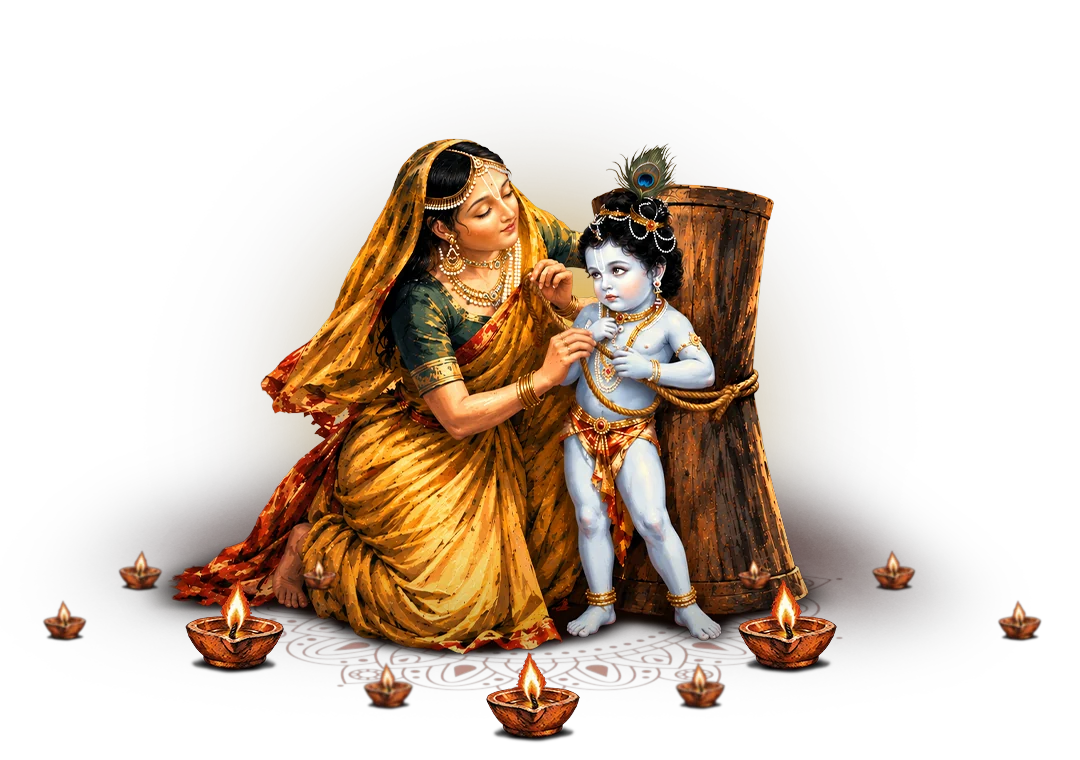
I bow to the Supreme Lord, whose form is eternal and full of knowledge and bliss. His earrings swing as He shines in Gokula. Afraid of Mother Yaśodā, He runs from the wooden mortar, but she runs even faster and catches Him from behind.
2Verse
rudantaṁ muhur netra-yugmaṁ mṛjantaṁ
karāmbhoja-yugmena sātaṅka-netram
muhuḥ śvāsa-kampa-trirekhāṅka-kaṇṭha-
sthita-graivaṁ dāmodaraṁ bhakti-baddham
Crying, He rubs His eyes again and again with His two lotus hands, and His eyes are full of fear. His sobbing breath shakes the necklace on His neck, which is marked with three lines. To this Dāmodara, bound by His mother’s love, I bow.
3Verse
itīdṛk sva-līlābhir ānanda-kuṇḍe
sva-ghoṣaṁ nimajjantam ākhyāpayantam
tadīyeśita-jñeṣu bhaktair jitatvaṁ
punaḥ prematas taṁ śatāvṛtti vande
With childhood pastimes like these He plunges the people of Gokula into pools of bliss. And He shows those who know Him only as the almighty Lord that He is conquered by His devotees’ love. With love I bow to Him again, hundreds of times.
4Verse
varaṁ deva mokṣaṁ na mokṣāvadhiṁ vā
na cānyaṁ vṛṇe ’haṁ vareśād apīha
idaṁ te vapur nātha gopāla-bālaṁ
sadā me manasy āvirāstāṁ kim anyaiḥ
O Lord, You can give any blessing, yet I do not ask You for liberation, nor for the highest liberation of Vaikuṇṭha, nor for any other boon. O master, I ask only that this form of Yours as the child Gopāla always appear in my heart. What would I do with anything else?
5Verse
idaṁ te mukhāmbhojam atyanta-nīlair
vṛtaṁ kuntalaiḥ snigdha-raktaiś ca gopyā
muhuś cumbitaṁ bimba-raktādharaṁ me
manasy āvirāstām alaṁ lakṣa-lābhaiḥ
Your lotus face is framed by soft curls of deep black tinged with red, and Mother Yaśodā kisses it again and again. Your lips are red like the bimba fruit. May this face always appear in my heart. I have no use for a hundred thousand other gains.
6Verse
namo deva dāmodarānanta viṣṇo
prasīda prabho duḥkha-jālābdhi-magnam
kṛpā-dṛṣṭi-vṛṣṭyāti-dīnaṁ batānu-
gṛhāṇeśa mām ajñam edhy akṣi-dṛśyaḥ
O Lord, O Dāmodara, O Ananta, O Viṣṇu, I bow to You. Be pleased with me, my master. I am drowning in an ocean of sorrows. Shower Your merciful glance on this poor, ignorant soul, bless me, and let me see You with my own eyes.
7Verse
kuverātmajau baddha-mūrtyaiva yadvat
tvayā mocitau bhakti-bhājau kṛtau ca
tathā prema-bhaktiṁ svakāṁ me prayaccha
na mokṣe graho me ’sti dāmodareha
O Dāmodara, while You were still bound to the mortar, You freed Kuvera’s two sons and made them Your devotees. In the same way, please give me Your own loving devotion, prema-bhakti. I have no desire for liberation.
8Verse
namas te ’stu dāmne sphurad-dīpti-dhāmne
tvadīyodarāyātha viśvasya dhāmne
namo rādhikāyai tvadīya-priyāyai
namo ’nanta-līlāya devāya tubhyam
I bow to the rope that binds You, which shines with brilliant light, and to Your belly, the home of the whole universe. I bow to Śrī Rādhikā, Your beloved. And I bow to You, the Lord of endless pastimes.
1Sung again
The recording returns to the first verse before the closing chant.
namāmīśvaraṁ sac-cid-ānanda-rūpaṁ
lasat-kuṇḍalaṁ gokule bhrājamānam
yaśodā-bhiyolūkhalād dhāvamānaṁ
parāmṛṣṭam atyantato drutya gopyā
✦Closing chant
jaya rādhā-dāmodara, rādhā-dāmodara
jaya jaya gurudeva prabhupāda
Glory to Rādhā and Dāmodara! Glory to the spiritual master, Śrīla Prabhupāda!
About the prayer
The Dāmodarāṣṭakam comes from the Padma Purāṇa, where the sage Satyavrata Muni speaks it. It remembers the day Mother Yaśodā tied child Kṛṣṇa to a wooden mortar after He broke a pot of yogurt and ran from her. That rope gave Him the name Dāmodara.
“Dāma means ropes, and udara means the abdomen.”
Śrīla Prabhupāda, The Nectar of Devotion, chapter “Devotional Service Surpasses All Liberation”
The pastime is told in Śrīmad-Bhāgavatam, Canto 10, Chapters 9 and 10. Verse 7 recalls how Kṛṣṇa, still tied to the mortar, freed Kuvera’s two sons, Nalakūvara and Maṇigrīva, who were standing as twin arjuna trees. Śrīla Prabhupāda quotes verse 3 in Śrī Caitanya-caritāmṛta, Madhya-līlā 19.230.
Offering a lamp
In 1974 Śrīla Prabhupāda asked devotees to keep the month of Dāmodara this way: in the evening, “you'll offer candle, a small candle, all of you, just before the Deity,” and sing the Dāmodarāṣṭaka.
Lecture on Śrīmad-Bhāgavatam 1.8.31, Māyāpur, 11 October 1974
How to read the English letters
- ā ī ū
- long vowels, as in father, police, rule
- e o
- always long, as in they and go
- ṛ
- “ri”, as in Kṛṣṇa (Krishna)
- ś ṣ
- “sh”
- c
- “ch”, so sac-cid is sach-chid
- ṁ
- a nasal “m” or “ng”
- ḥ
- a soft echo of the vowel before it: punaḥ is puna-ha
- ṅ ñ ṇ
- kinds of “n”
- ṭ ḍ
- “t” and “d” with the tongue curled back
- ’
- an “a” that has merged into the word before: vṛṇe ’haṁ is read vṛṇe-haṁ